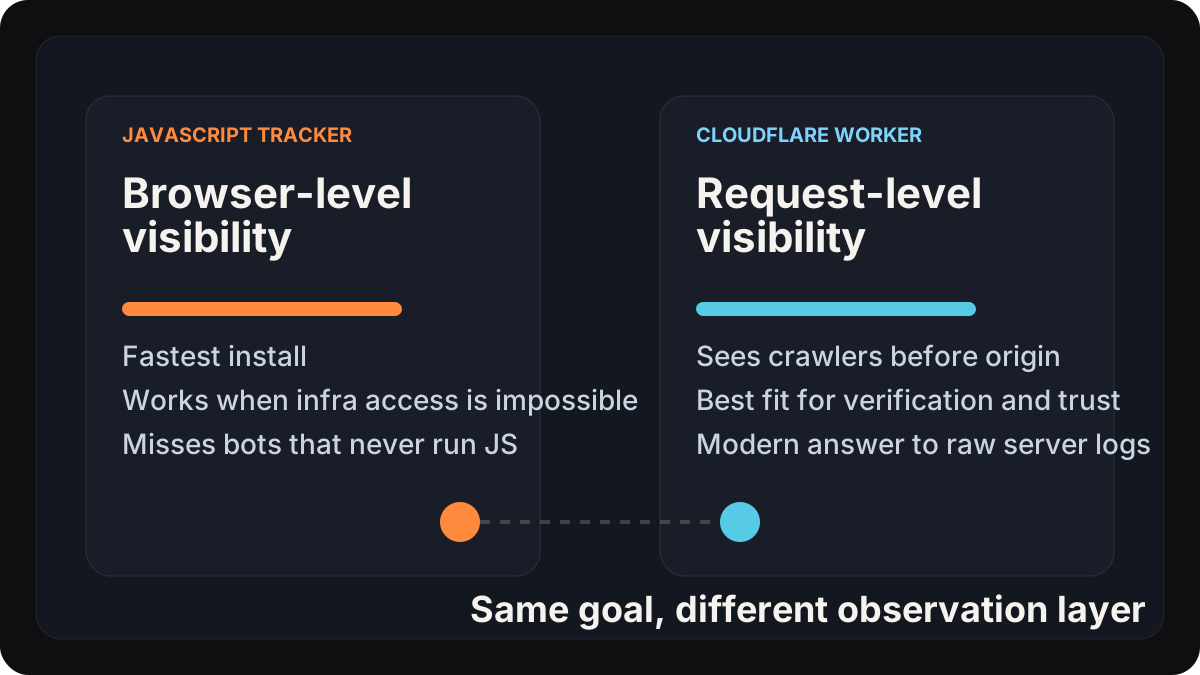
Why the Worker is the best model
A Cloudflare Worker runs before the request reaches your origin. That matters because many crawlers never execute your page JavaScript at all. They ask for the resource, inspect the response, maybe follow links, and move on. If your tracking begins only after a browser renders script, you are already observing the wrong layer for a meaningful slice of crawler activity.
The Worker fixes that by capturing the request as it arrives at the edge. Instead of waiting for raw logs later, you can extract the four fields that matter right there and turn the request into a clean bot event immediately.
Why this is different from “just use logs”
The Worker is really a modern answer to the old server-log problem. Logs were useful because they sat at the request layer. But in modern infrastructure, the teams asking the crawl question often do not own or access that raw layer directly. The Worker restores request visibility without asking teams to build a separate pipeline for giant request files.
- No need to hand full logs to marketing or SEO teams.
- No need to process bulky files just to answer one narrow crawl question.
- No need to copy more request data around the company than the product actually needs.
Why the JavaScript tracker still exists
Because the operational truth is that not every company can deploy edge code on demand. Some sites are not on Cloudflare. Some sit on platforms where the closest you can get to implementation is dropping a script onto the page. Some teams need a practical answer today, not an infrastructure project next quarter.
The JavaScript tracker is valuable because imperfect visibility is still better than no visibility. It gives teams a lightweight path to observe major crawler activity when the Worker path is blocked, and it lets them start learning before they solve the full infrastructure problem.
How the two options compare in practice
Request-layer visibility
- Captures requests before origin.
- Sees bots that never execute JavaScript.
- Best path for verification and operational trust.
- Closest replacement for server-log visibility.
Browser-level visibility
- Fastest setup when deployment resources are tight.
- Works on more platforms with less coordination.
- Useful as a starting point or fallback path.
- Will miss crawlers that never run your page script.
What changes when you think at the edge
The bigger shift here is conceptual. Edge collection changes how teams think about web infrastructure. Instead of treating requests as raw server exhaust that only ops teams can touch, the edge becomes a programmable observation layer. You can inspect requests, reduce them, remove unnecessary detail, and keep only the event shape that the business question actually needs.
That is why the Worker path feels cleaner than old-school log analysis. It does not centralize all traffic into one huge internal pipeline. It turns the edge into a scoped sensor.
Why the four-field model matters
CrawlerLogs is intentionally narrow: URL, IP, user-agent, timestamp. That is enough to classify, verify, trend, and compare bot behavior. It is not enough to recreate a full analytics platform, and that limitation is a strength. It keeps the product focused on crawler visibility while avoiding the privacy and operational sprawl that comes from hoarding full request data.
The product decision in one sentence
Lead with the Worker because it is the best technical answer. Keep the JavaScript tracker because real teams still need a no-infrastructure path that gets them moving.