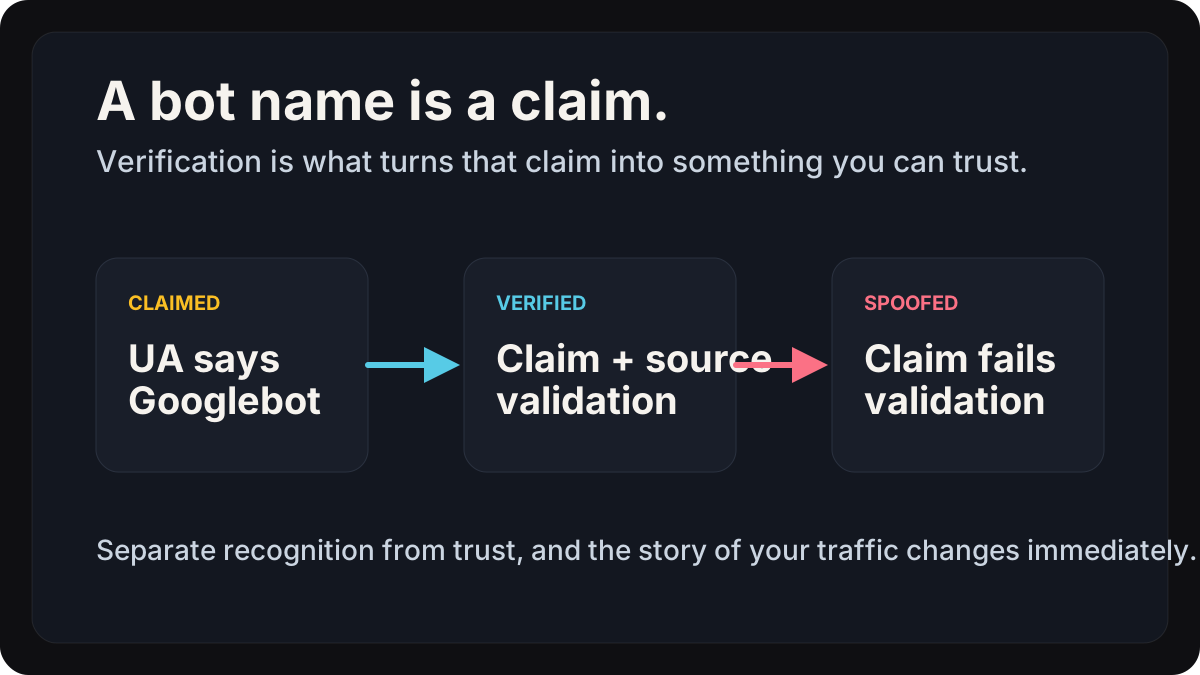
Why the distinction matters
If you do not separate claimed, verified, and spoofed traffic, you can draw the wrong conclusion from the same dashboard. A spike that looks like healthy search-engine attention may actually be impersonation. A quiet period may seem harmless until you realize the “bot traffic” you were watching was never trustworthy in the first place.
What a user-agent can and cannot tell you
The user-agent is still useful. It helps map a request to a likely bot name, owner, family, and category. But it is not proof. Any client can send a header that says Googlebot, Bingbot, GPTBot, or almost anything else that looks credible enough at first glance.
That is why collapsing everything into a simple boolean like “is bot” is not enough. It answers the recognition problem but ignores the trust problem.
What verification adds
Verification is the second layer. Depending on the bot family, that usually means checking source IP ownership, CIDR ranges, DNS patterns, or whatever validation model the bot owner documents publicly. Once you add that layer, the same traffic becomes much more operationally useful.
- You can trust a verified hit differently from a merely claimed hit.
- You can spot impersonation instead of counting it as legitimate crawl demand.
- You can interpret spikes and gaps with much more confidence.
Why spoofed bots distort reporting
Spoofing is not just a security footnote. It changes the meaning of your visibility data. If a scraper or abusive client pretends to be a known crawler, your reporting can look healthier, more search-driven, or more AI-focused than it really is. That creates confusion for SEO, platform, security, and leadership teams all at once.
The practical status model
A useful product model is not simply “bot” or “not bot.” It is a trust ladder that tells the user how much confidence to place in each request.
No useful match yet, so there is not enough context to classify or trust the request.
The request matches a known bot signature, but validation has not been confirmed yet.
The identity claim matches and the documented validation checks pass.
The user-agent claims a known bot identity, but the validation layer says not to trust it.
Why this changes decisions
Verified Googlebot activity can support discussions about crawl access, freshness, and site health. Spoofed Googlebot activity belongs in a completely different conversation. Claimed AI crawler traffic may be interesting, but it should not be treated as established fact until you know what that bot family can actually verify.
What a good bot dashboard should do
A good product should not flatten all bot traffic into a single line item. It should show what the request claimed to be, whether that claim is trustworthy, and how your interpretation should change based on that status. That is the shift from “interesting bot counts” to bot data that teams can actually act on.