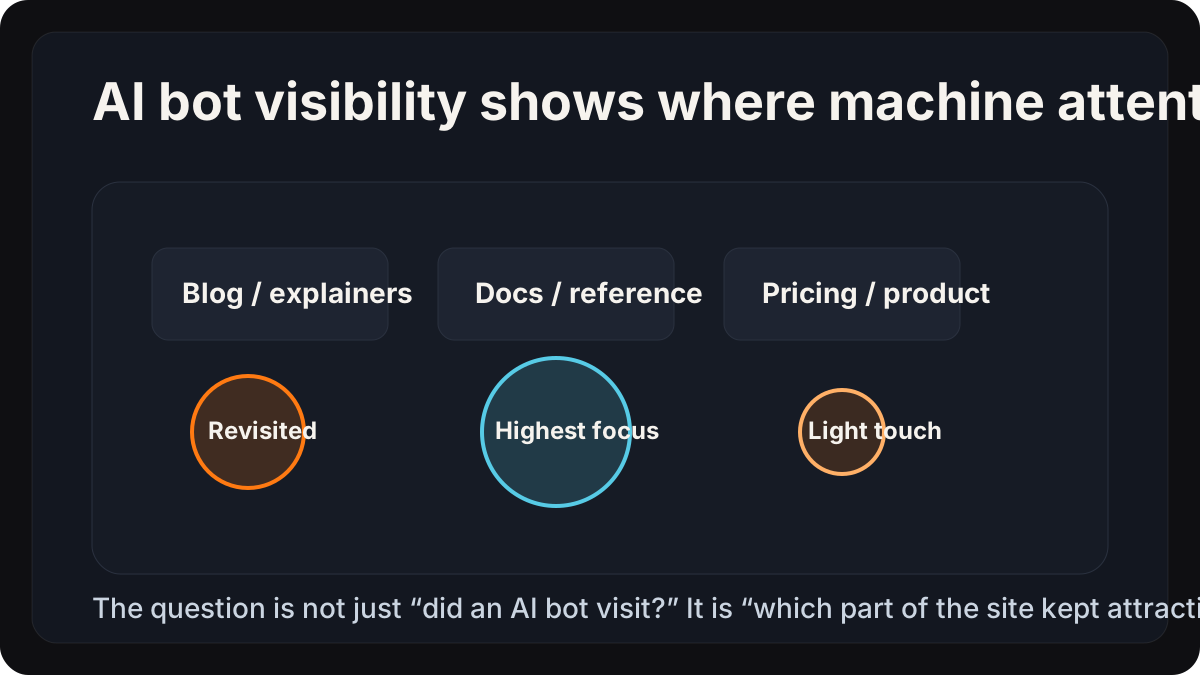
Why AI bot visibility matters
For many teams, AI traffic gets discussed at the level of headlines and speculation. People know AI systems are crawling the web, but they cannot see where those requests are happening on their own site. That makes strategy vague. Once the request pattern is visible, the conversation becomes much more specific and much less theoretical.
What these requests can tell you
AI crawler traffic can show which parts of the site appear most machine-interesting right now. That can mean explainers, documentation, pricing pages, templates, category pages, or some combination that reveals how the site looks from a machine-facing perspective.
- Which sections attract repeated automated attention.
- Whether launches, PR, or new publishing bursts correlate with crawler interest.
- Whether blog content, docs, and product pages behave very differently.
- Whether some content is effectively invisible while other content gets revisited.
What they cannot tell you on their own
A crawler visit does not automatically mean indexing, citation, retrieval inclusion, or referral traffic. It is still a request signal, not a guaranteed downstream outcome. But it is still extremely useful because it gives you evidence of machine attention before more obvious visibility metrics move.
Why page-level visibility matters
Domain-level summaries are too blunt here. The real question is where the attention concentrates. Are AI crawlers revisiting long-form explainers? Are they clustering around docs and reference content? Are they touching pricing pages more than you expected? Strategy starts to form once you can see the pattern at the URL and directory level.
What to watch over time
Look for sections that get revisited steadily instead of one-off touches.
Watch what changes after new guides, launches, or major documentation updates.
Compare how AI crawler patterns differ from search-crawler patterns on the same pages.
Notice whether attention spreads broadly or stays focused on a few URLs and directories.
Why this is useful even without certainty
Teams often wait for a definitive metric before they act. In practice, visibility data is useful because it reduces uncertainty. It tells you where machine systems are spending time right now. That makes it easier to decide which content surfaces deserve more investment, more control, or more scrutiny.
The broader point
AI bot visibility is less about proving one final outcome and more about understanding where machine demand is forming. The earlier you can see that attention, the earlier you can make better decisions about content architecture, publishing priorities, and machine-facing visibility.